
- 作者:密扁
- 来源:财经郎眼
- 发布时间:2026-08-26
肖申克的救赎
NHRC issues notices to Centre, State govts over Devadasi system_我的网站

一 | New Delhi, Oct 14 (UNI) The National Human Rights Commission (NHRC) on Friday issued notices to Union Ministries of Women & Child Development, Ministry of Social Justice & Empowerment, the governments of Karnataka, Kerala, Tamil Nadu, Andhra Pradesh, Telangana and Maharashtra over menace of Devadasi system, calling for a detailed report in the matter.
The report must contain the supporting data mentioning the steps taken/proposed to be taken by the authorities to prevent the Devadasi system and to provide the Devadasis rehabilitation and social security so that they could lead their lives with dignity. It should also mention whether any local laws have been enacted in the States to prevent such social evil, and if not what steps have been proposed to be taken to eradicate it, NHRC in a statement stated.
The Commission took suo motu cognizance of a media report on the continued menace of Devadasi system, especially in southern part of India. Reportedly, the Karnataka and Andhra Pradesh governments had declared this tradition of Devadasi as illegal in the year 1982 and 1988, respectively. However, reportedly, over 70,000 women have been leading their lives as Devadasi in Karnataka alone, it stated.
A Commission constituted under the chairmanship of Justice Raghunath Rao had reportedly held that there are 80,000 Devadasis in the States of Telangana and Andhra Pradesh, it added.
Issuing the notices, the Commission observed that a few years back, it had received a complaint regarding the malpractice of Devadasi in the States of Tamil Nadu and Andhra Pradesh. In response to its notices, the state authorities had denied the allegations. Various laws have also been enacted in the past to stop the malpractice of the Devadasi system but it is still prevailing, as the news report indicates. The Apex Court has also taken a stern stance in condemning the malpractice of dedicating young girls as Devadasis. It has described the practice as an evil done to women by subjecting them to sexual exploitation and prostitution. This is a serious issue of violation of Right to Life, Dignity and Equality of these victim women, it added.
UNI CM SHK2145。

二 |
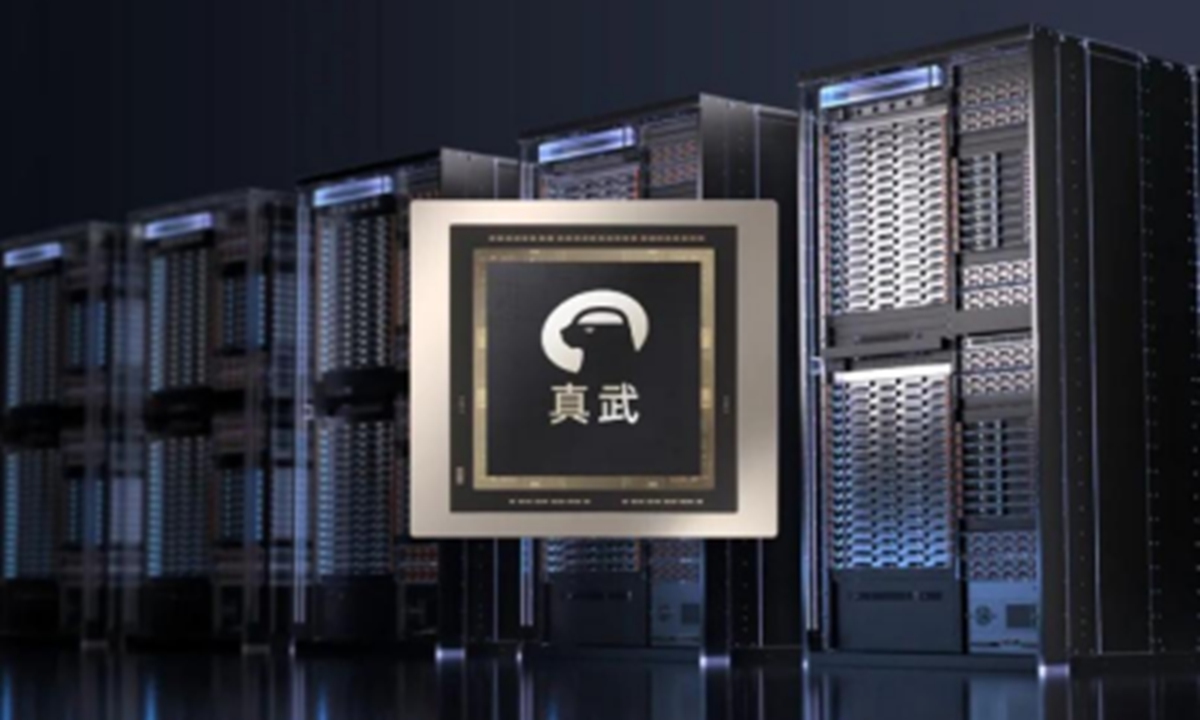
The instance is designed to handle inference for mixture-of-experts models with up to 10 trillion parameters, the company said in a statement sent to the Global Times on Wednesday.
This marks the first supernode-form computing architecture in China to successfully run large language models exceeding 2 trillion parameters, according to the company.
Industry expert Tian Feng told the Global Times that the commercial rollout of supernode infrastructure could significantly reduce training cycles, lower costs, and speed up iteration for AI developers requiring massive computational resources.
The company said the new instance has already been used to power commercial services for large language models such as KimiK3 and Qwen3.8Max.
The Lingjun Zhenwu M890 supernode instance supports FP8/FP4 low-precision computing. Through the ICNSwitch 1.0 chip, its scale-up interconnect scale has been expanded from 16 cards to 64 cards, with inter-card interconnect bandwidth boosted to 800 GB/s. Enterprises can provision 64-card, high-speed-interconnect computing units through the cloud without building their own data centers, according to the company.
In training scenarios such as autonomous driving and embodied intelligence, the instance delivers three times the training performance compared with the previous-generation Zhenwu 810E, the company said.
Ulanqab, where the supernode instance debuted, is one of Alibaba Cloud's five super data centers. The facility sources approximately 90 percent of its electricity from green energy, providing a low-carbon operating environment for high-density computing power.
Leveraging its climate, energy and network advantages, Ulanqab has transformed from "China's potato hometown" into the "token factory" - a term increasingly used in the AI industry to describe infrastructure dedicated to producing the digital building blocks generated by large language models.
By the end of 2025, the city had attracted 84 data center projects, including 81 intelligent computing centers, with total investment exceeding 500 billion yuan ($74.1 billion) and operational computing power reaching approximately 172,000 petaflops, ranking it firmly in the nation's top tier, according to domestic media reports.
On August 6, China's largest AI computing industrial park was completed and put into operation in Ulanqab. The project highlights a broader race in China to build massive AI data centers capable of supporting the next generation of AI models while addressing soaring electricity demand, according to Chinese experts.
In recent years, Inner Mongolia has been rapidly positioning itself as a global-scale AI computing center cluster. Major technology companies, including Huawei, Tencent, ByteDance and Alibaba; telecom operators China Mobile, China Telecom and China Unicom; as well as cyberspace infrastructure service provider VNET, have established computing facilities in the region.
As the AI industry gradually transitions from the training era to the inference era and large model parameters continue to expand, supernodes have become a central battleground for AI infrastructure.
Chinese vendors are accelerating deployments in this space. Huawei has commercially deployed more than 750 sets of its Ascend 384 supernodes across industries including internet, telecom operators, finance, education, healthcare, transportation and manufacturing. It is also the only domestic supernode to have trained state-of-the-art (SOTA) models.
Baidu AI Cloud has also launched its Tianchi 256-card supernode based on Kunlun chips, with support for major models including Wenxin, DeepSeek, GLM, and MiniMax.
Meanwhile, supercomputer manufacturer Sugon has unveiled China's first fully domestic 100,000-card AI supercluster Sugon 8000 (Dengfeng), integrating supercomputing and AI computing on a unified architecture. It has now been connected to the national supercomputing internet to provide computing services to government, research, and enterprise clients nationwide.
Tian, former dean of SenseTime's Intelligence Industry Research Institute, told the Global Times that the flurry of domestic supernode launches reflects a broader inflection point as China's AI sector pivots from training capacity toward efficient, large-scale inference.
The expert further said that the commercial viability of these systems - evidenced by Huawei's extensive deployed base, Baidu's rapid model adaptation and Sugon's integration into the national computing network - suggests domestic vendors are moving beyond proof-of-concept to genuine production-grade infrastructure, a prerequisite for sustaining the next wave of trillion-parameter model proliferation, Tian noted.
The move also underscores China's push for self-reliance in AI infrastructure as US chip export restrictions continue to tighten, Tian said, noting that, in the supernode domain, Chinese companies are shifting from imported graphics processing units toward homegrown interconnect chips and domestic compute clusters, a transition that could reshape value allocation across the AI industry chain.
。
Current article:http://4z0.cuancuguanzhongnieqinyazhun.cyou/pn9fol/6sv.html
Published on:06:15:23
- 本文标签:
- 我们结婚了