


妖女迷行
‘Let traditional Chinese patterns shine with new splendor,’ says Chang Shana, former president of the Central Academy of Arts and Design_我的网站

一 | 根据盖洛普民意调查,大约5%的美国人口认为自己是素食主义者。
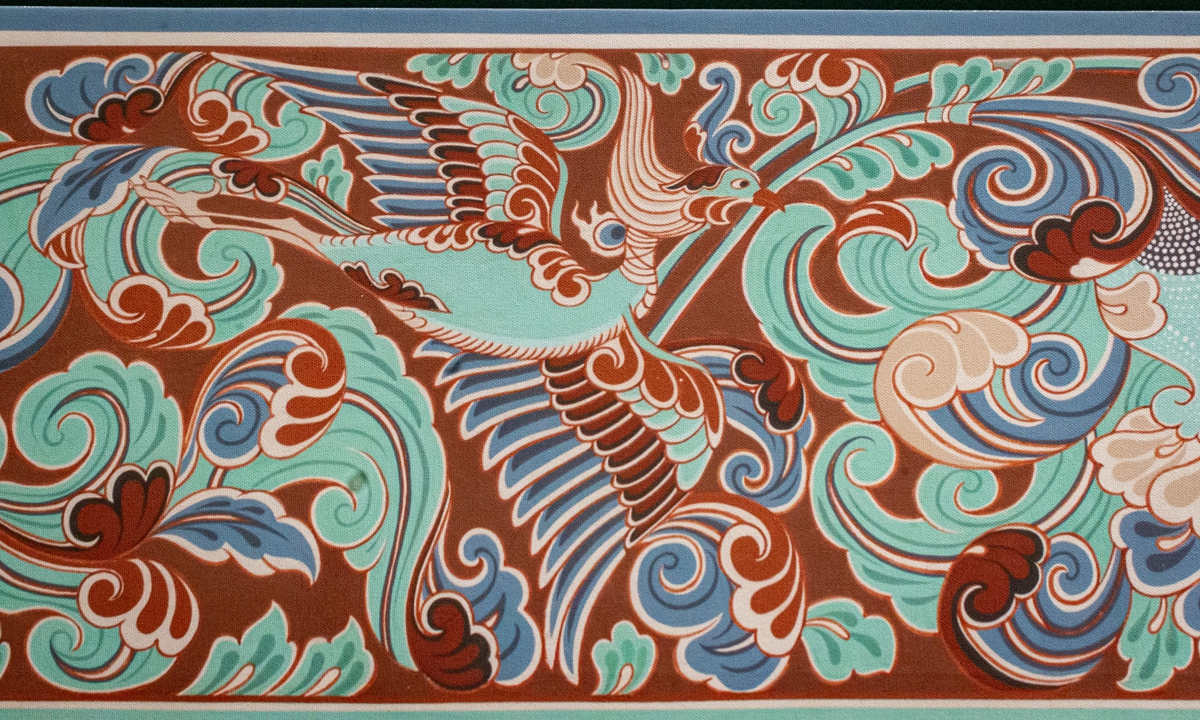
As an important part of Dunhuang art, decorative patterns are the carriers with the most rigorous compositional principles and the richest cultural spirit.
In the Dunhuang caves of Northwest China, there are numerous floral, cloud, flame, animal, and other decorative patterns. These patterns come from different periods and are found on and in structures and forms such as caisson ceilings, canopies, halos, costumes, border decorations and floor tiles, blending with statues, murals and architectural space.
Such patterns not only organically and harmoniously enriched and decorated murals, painted sculptures and entire caves, making them more splendid and perfect, but also developed their own period styles and characteristics, vividly recording the formation, change and development of Chinese decorative art and reflecting the social culture and customs of different times.
From the Sixteen Kingdoms (304-439) period through the Sui (581-618) and Tang (618-907) dynasties and beyond, Dunhuang cave mural art continued to evolve in both content and form with the changing times, and decorative patterns changed accordingly. From the three-petal leaf and honeysuckle patterns of the Northern Wei (386-534) to the scrolling-grass, baoxiang flower and linked-pearl patterns of the Sui and Tang and the medallion floral patterns dominated by mineral green in the Western Xia (1038-1227), Song (960-1279) and Yuan (1279-1368) periods, the pattern forms and color systems of different eras together form the historical lineage of Dunhuang decorative patterns, and also reflect the continuity and creativity of Chinese art.
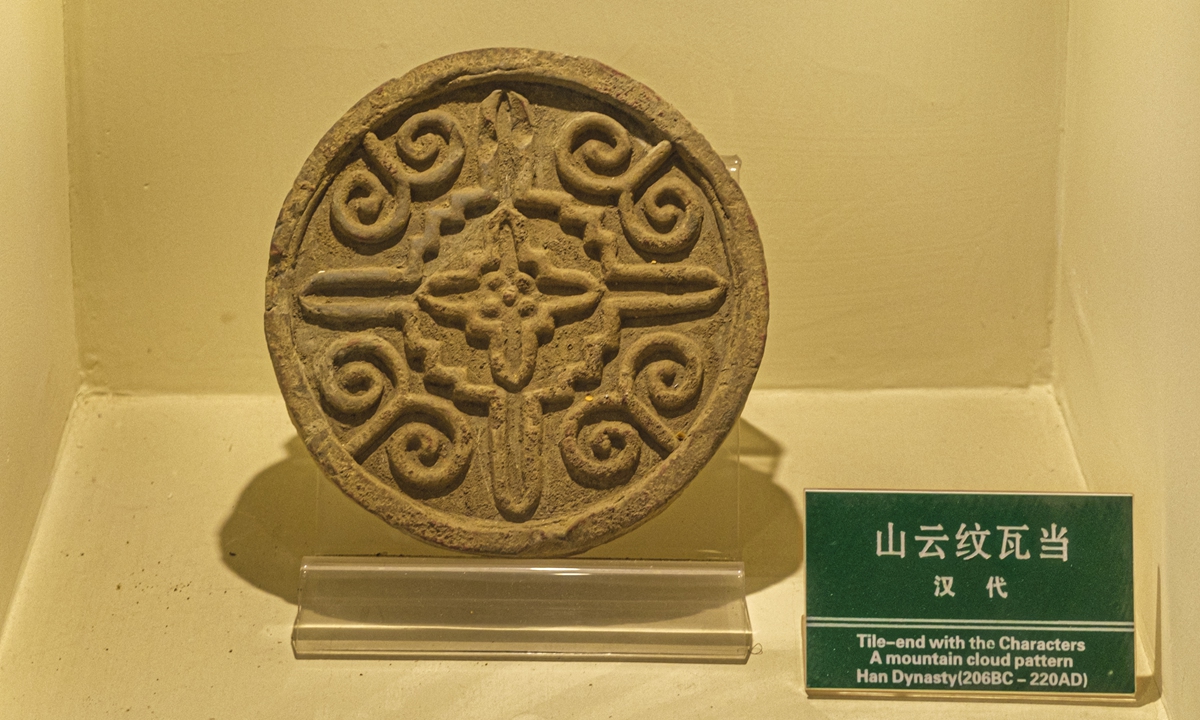
I once led students in forming a research group on "Chinese Decorative Patterns of Dunhuang Through the Ages," systematically collecting, organizing, classifying and copying the decorative patterns on Dunhuang murals and painted sculptures, including the motifs. Through this sorting and copying, we conducted in-depth research and gained a full understanding of the historical culture, artistic features and decorative effects of each type of Dunhuang pattern, and clarified the causes, characteristics and historical evolution of each type. This is the "source" for contemporary design application.
Traditional patterns are an important source of inspiration for my designs. In design, on the one hand, the original appearance of traditional patterns should be preserved to a certain extent; on the other hand, they should be summarized, simplified, extended or enriched to make them more modern.
The ceiling pattern of the banquet hall of the Great Hall of the People was inspired by Tang Dynasty caisson patterns from Dunhuang. With a lotus as the center of the ceiling, and in line with the functional needs of the architectural structure, lighting and ventilation, it combines Dunhuang floral patterns with modern functions to create a spatial decoration with a distinctive national style. This design remains regarded as a model of the contemporary expression of traditional patterns.
I was invited to serve as artistic consultant for the creative program "Nian Jin" (Auspicious Brocade) at China Media Group's 2024 Spring Festival Gala for the Year of the Dragon. Through natural patterns such as mountains and clouds of the Han Dynasty (206BC-AD220), bird and animal patterns such as flying phoenixes and auspicious lions of the Tang Dynasty, floral patterns such as peonies and laurels of the Song Dynasty, and auspicious patterns such as gourds and lanterns of the Ming Dynasty (1368-1644), we enabled the audience to appreciate the aesthetic tastes passed down by the Chinese people over thousands of years and the breadth and depth of fine traditional Chinese culture.
In contemporary society, as standardized, mass-produced industrial products have become dominant, people hope to find forms that reflect their own national cultural language and are distinctive, warm and pleasing. Traditional patterns can make people feel the depth of history and emotional warmth, and can further embody the cultural character of their nation through modern design.
The study and innovation of decorative patterns is a highly practical part of inheriting and promoting fine traditional Chinese culture. It concerns not only vision and beauty, but also cultural attitudes and identity. These patterns are not just a form of heritage found on murals or on other cultural relics; they can enter our daily lives and become cultural symbols in fabrics, utensils, spaces and even digital interfaces.
I believe that more and more later generations engaged in art and design will, on the basis of promoting fine traditional Chinese culture and adapting to people's current needs for culture, art and a better life, take innovative steps to create a new style of modern design art with Chinese characteristics - one that is national, scientific and popular, so that traditional Chinese decorative patterns can constantly generate new vitality and shine with new splendor.
The author is former president of the Central Academy of Arts and Design. This was compiled and translated by the Global Times English edition based on an article published by the People's Daily Overseas Edition on August 20.
。女性吃素的可能性比男性高50%左右。

二 | 认为自己是自由派的人比保守派或温和派更有可能成为素食主义者。看一下饮食和特定健康问题之间的关联,并假设前者通过某种形式的营养缺乏导致后者,这似乎很直接。

三 | 然而,新的分析考虑了广泛的营养因素,包括总热量摄入、蛋白质摄入、微量营养素摄入和食品加工水平。这表明,素食者中较高的抑郁症发病率并不是由他们饮食中的营养成分造成的。那么,什么可以解释素食主义和抑郁症之间的联系?是否有一些非营养性的机制使前者导致后者?还是这种关系完全是由其他因素造成的?素食主义和抑郁症之间存在联系的原因可能有多种。首先,有可能是抑郁症导致人们更有可能成为素食主义者,而不是相反。抑郁症的症状可能包括对负面想法的反刍,以及内疚的感觉。

四 | 假设抑郁症患者和非抑郁症患者同样有可能遇到屠宰场和工厂化养殖的令人不安的事实,那么抑郁症患者可能更有可能反刍这些想法,更有可能为自己在创造需求中的角色感到内疚。在这种情况下,抑郁的素食主义者这样想并不一定是错的。虽然抑郁症有时被定性为具有不切实际的消极看法,但有证据表明,轻度至中度抑郁症患者对不确定事件的结果有更现实的判断,对自己的角色和能力有更现实的认识。在这种情况下,肉类生产中确实存在对动物的残酷对待。而这确实是由消费者对廉价肉类的需求造成的。有时在工厂化养殖中,动物真的受到了残忍的对待。

五 | 第二,坚持素食有可能会因为营养以外的原因导致抑郁症。即使素食中没有缺乏"快乐的营养素",也可能是放弃肉食通过其他方式导致抑郁症。例如,食用素食可能会影响一个人与他人的关系和对社会活动的参与。

六 | 事实上,它有时与嘲笑或其他形式的社会排斥有关。值得注意的是,这项新研究是基于在巴西收集的调查数据,巴西是一个以肉食重的国家而闻名。一些调查数据指出,近年来巴西的素食主义急剧增加,从2012年的8%上升到2018年的16%。然而,最近的论文调查了超过14000名巴西人,发现只有82名素食主义者。人们不禁要问,在印度或其他素食主义更像是一种社会规范的国家,是否会观察到素食主义和抑郁症之间的相同联系。更重要的是,随着英国和其他发达国家的素食主义比例的增加,我们是否会看到这种关系随着时间的推移而消失?最后,有可能素食主义和抑郁症都没有导致对方,但两者都与一些第三因素有关。

七 | 这可能是任何数量的与素食主义和抑郁症相关的特征或经历。
八 | 例如,女性比男性更有可能成为素食主义者,也更有可能经历抑郁症。然而,巴西的研究将性别考虑在内,排除了这个特殊的第三变量。有一个变量没有被研究,但似乎与素食主义和抑郁症都有联系,那就是接触到肉类工业的暴力图像。防止对动物的虐待是素食主义者最常提到的避免吃肉的理由。像《Dominion》和《Earthlings》这样描述肉类工业的残酷行为的纪录片,不能轻易地被描述为感觉良好的电影。人们很容易想象,一个消费了这种媒体的人既会成为素食主义者,尤其是当大多数人选择另眼相看的时候,会变得很沮丧。相反,素食者的社会经历可能导致抑郁,抑郁可能导致成为素食者的可能性增加,或者素食主义和抑郁可能是由第三个变量引起的,例如接触到暴力的肉类工业图像。本文首次发表于《 The Conversation》杂志。
Current article:http://4z0.cuancuguanzhongnieqinyazhun.cyou/ingxe7/g4pf.html
Published on:16:54:27
 解码“杭州服务”一座服务业标杆城市的成长逻辑
 自由人撲滅火花話咁易
 售12.18万起/共推出4款车型 2025款红旗E-QM5正式上市
 (乡村行·看振兴)“绿宝石”串起富民产业链 广西乡村绘就振兴新图景,(乡村行·看振兴)“绿宝石”串起富民产业链 广西乡村绘就振兴新图景
 国家统计局:2026年我国早稻生产保持稳定
 中新网评:白菜蘸甲醛,腐蚀的是良知底线
 Xi urges learning from Jiang Zemin's far-sightedness, strategic thinking
 6 Most Romantic K-Dramas For Every Mood and Moment
 上海海港官方确认:吾米提江意外遭遇车祸,最新状况披露!此前浦东警方通报:一4S店员工带顾客试驾期间驶上人行道,撞到一名行人
 9.98万起 续航430-610km 新款AION Y Plus正式上市
 Confirmed: Raj Nidimoru's Parents Attend His Wedding With Samantha